

Nature
1982 · 45 seasons · 697 episodes · Returning Series · PBS
Documentary, Family
TMDB 7.9 · 45 votes
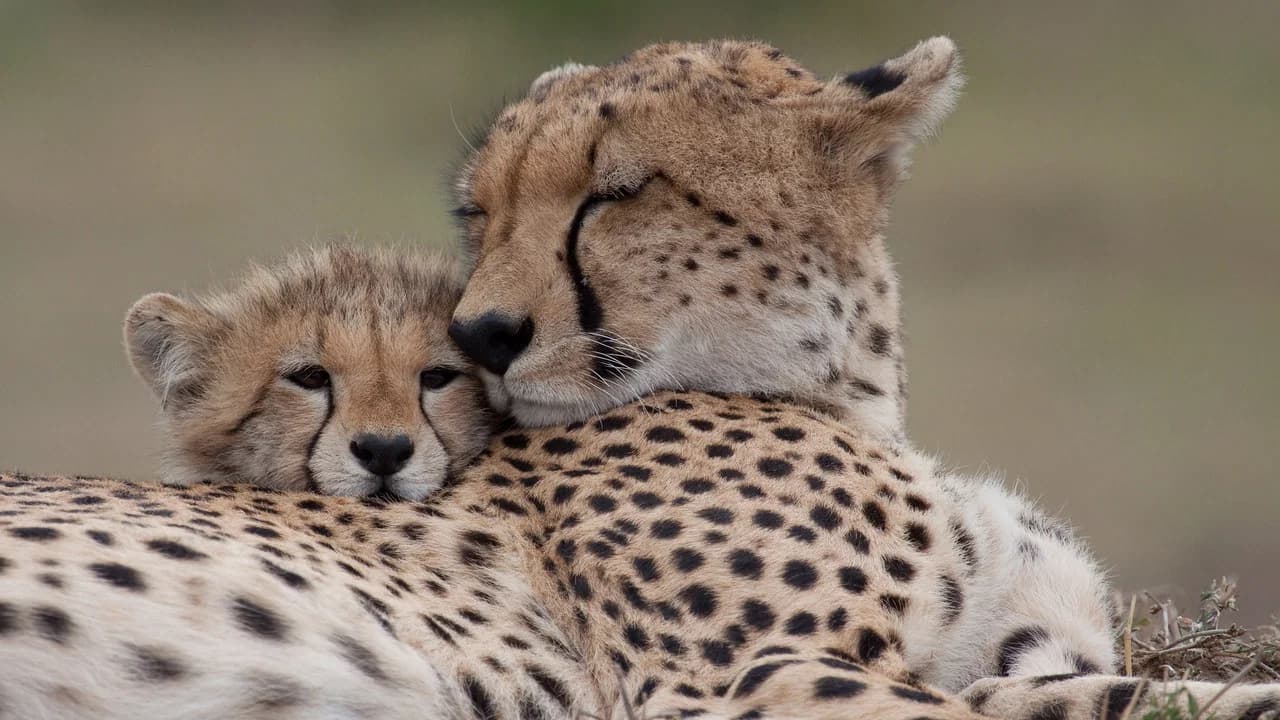
Consistently stunning documentaries transport viewers to far-flung locations ranging from the torrid African plains to the chilly splendours of icy Antarctica. The show's primary focus is on animals and ecosystems around the world. A comic book based on the show, meant to be used an as educational tool for kids, was briefly distributed to museums and schools at no cost in the mid-2000s.
Episodes
- S01E01The Flight of the Condor: Ice, Wind, and Fire1982-10-1053m
Following the path of the condor, whose ten-foot wingspan enables it to soar effortlessly over the peaks of the Andes mountains, this film starts at the storm beaten rocks of Cape Horn at the southern tip of South America and journeys north to the highest peak in the Americas - Aconcagua. Along the way, we see exotic animals and birds such as the penguin, hummingbird, sea otter, guanaco, ostrich-like rhea, and puma.
- S01E02The Flight of the Condor: Ocean, Desert, and Thin Air1982-10-1753m
While the cold waters of the Pacific Coast of South America are among the richest in the world, the shore is the driest desert in the world. Yet it is not at all devoid of life. Lizards snatch morsels from the waves, and seagulls fly 40 miles into the desert to nest. The condor searches for carrion and vampire bats feed on the blood of sleeping sea lions. This is a beautiful portrait of a giant land.
- S01E03The Flight of the Condor: Down the Amazon1982-10-2453m
The third part of the series is a spectacular visual trip down the fabled river. From the snow-clad summit of the volcano Cotopaxi and others comes the greatest river in the world as melting ice creates a torrent that drops three miles in its first short distance. The river is fed by magnificent waterfalls and is channeled through gorges out into the tropical rain forest where there are more species of birds than anywhere.
- S01E04Amate: The Great Fig Tree1982-10-3153m
- S01E05Kopje: A Rock for All Seasons1982-11-0753m
- S01E06On the Edge of Paradise1982-11-1453m
Examines the fragile ecology of the Caribbean area in a unique and vivid look at the forces affecting this area's ecological balance, such as hurricanes, volcanoes, the continuing evolution of different wildlife and man's influence. International agreements and commissions created to protect the Caribbean area are also covered.
- S01E07Forest in the Clouds1982-11-2153m
Surveying Costa Rica's Monte Verde preserve, which contains some 200 varieties of trees, including 300-ft. oaks. Animal life includes deadly scorpions; army ants; and plumed quetzals, sacred bird of the Maya civilization.
- S01E08The Discovery of Animal Behavior: Natural Mysteries1982-11-2853m
The first of the series takes us back to the 13th Century to explore medieval superstitions of ancient "naturalists." Frederick II of Hohenstaufen had a passion for falconry that resulted in his immense illustrated book De Arte Venandi Cum Artibus (On the Art of Hunting With Birds.) Series host is Dr. Donald Johanson, noted paleoanthropologist and director of the Institute of Human Origins in Berkeley, California.
- S01E09The Discovery of Animal Behavior: In Praise of God1982-12-0553m
Theologians and clerics in the 17th and 18th centuries were among the first to study animal behavior. John Ray began in the 1600's to catalog "the work of the Creation," starting with plants and later including birds. Sir Francis Willoughby continued this work. Rev. Gilbert White studied bird songs, Charlie LeRoy experimented with wolves and deer, and Charles Waterton wrote about jungle animals.
- S01E10The Discovery of Animal Behavior: Search for the Mind1982-12-1253m
In 1848, Charles Darwin began the quest to understand the mysteries of the animal mind. Following Darwin's achievement - suggesting a plausible process for evolution: natural selection - Lewis Henry Morgan discovered evidence of cogitation in beavers. George Romanes experimented with fish, cats, and dogs, Douglas Spalding with newborn chicks, all finding apparent mental activity. Meanwhile Jacques Loeb attempted to prove animals "mindless."
- S01E11The Discovery of Animal Behavior: A Question of Learning1982-12-1953m
First there is a re-creation of Ivan Pavlov's experiments which led to the discovery of the "conditioned reflex." Then we see the investigation by Otto Pfungst of "Kluge Hans" (Clever Hans) a horse whose apparent knowledge of arithmetic was actually response to subtle signals from his trainer. We also see dramatizations of Thomdike's experiments with chicks, Watson's with terns, and B. F. Skinner's famed work at Harvard in the thirties.
- S01E12The Discovery of Animal Behavior: Signs and Signals1982-12-2653m
Continuing with the exploration of animal communication we see recreations of Karl von Frisch unraveling the language of honey bees. Julian Huxley, who discovered a possible language in the ritual movements of great-crested grebes, Konrad Lorenz who recorded the visual language of geese, and Niko Tinbergen, who studied the habits of hunting wasps and together with Esther Cullen recorded the relationship of temperament in birds to their habitat.
- S01E13The Discovery of Animal Behavior: Living Together1983-01-0253m
Scientists have long attempted to discover why animals rarely live alone. Animal society seems to be based on despotic rule by the strongest, tempered by the powerful attractive forces of sex. Portrayals of Thorlief Schjelderup-Ebbe, Solly Zuckerman, Clarence Ray Carpenter, Frank Fraser Darling, William Hamilton, and Amotz Zahavi, show the contributions of each of these men towards understanding the puzzle.
Cast
 George PageNarrator (voice), Host
 F. Murray AbrahamNarrator (voice)
 Donald C. JohansonSelf
 David AttenboroughSelf, Narrator (voice), Host
 Jay O. SandersNarrator (voice)
 Nora YoungNarrator (voice)
 Jayce BartokNarrator (voice)
 Gordon BuchananHost
 Tim Pigott-SmithNarrator (voice)
- Kevin DraineNarrator (voice)
- Chris MorganNarrator (voice),
 Olga MeredizNarrator, Narrator (voice)